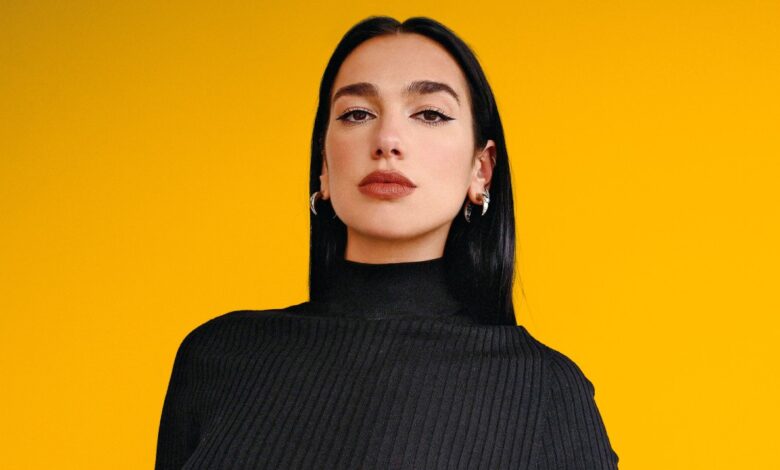
Dua Lipa: The Global Pop Powerhouse Redefining Music, Style, and Modern Womanhood
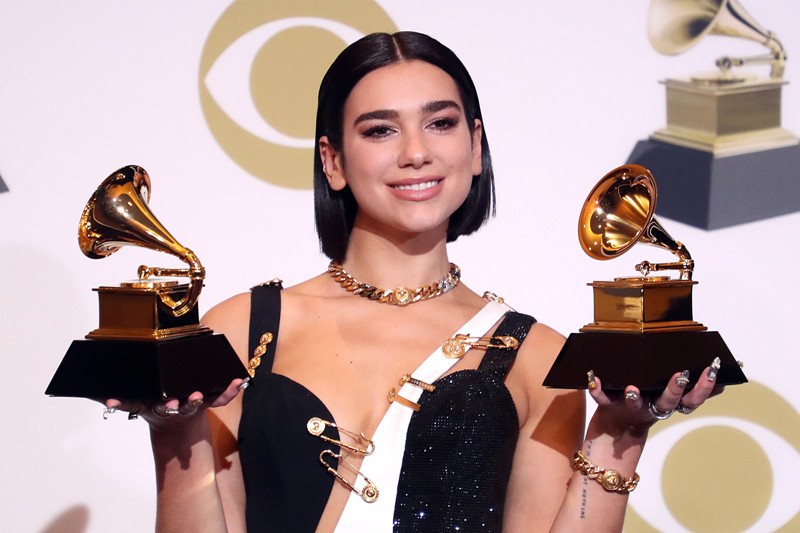
Dua Lipa – Best New Artist, Best Dance Recording – ÔElectricityÕ
61st Annual Grammy Awards, Press Room, Los Angeles, USA – 10 Feb 2019
Dua Lipa has become one of the most influential and distinctive pop artists of the 21st century, a performer whose sound, style, and presence have reshaped what modern pop can look and feel like. Born in London in 1995 to Albanian parents from Kosovo, her journey to global stardom is not just the story of a talented singer rising to fame but the evolution of a young woman who refused to be limited by expectations, borders, or the rules of the industry. Her life reflects resilience, creative courage, international identity, and an unshakable belief in the power of reinvention. Even before she reached global charts, people around her noticed her determination. Dua grew up in a household filled with music—her father, Dukagjin Lipa, was a rock singer, and her mother loved the power of pop melodies. Their home was always alive with sound, from classic rock to contemporary pop, instilling in her an early sense of rhythm and artistic expression. But music was not simply a passion; it was a language, a world where she felt seen and understood. When she was just eleven years old, her family moved back to Kosovo, a move that might have discouraged a less determined child. But for Dua, it ignited a deeper desire to return to London, the heart of her musical dreams. She made a decision few teenagers would dare to consider: at fifteen, she moved alone back to London, living with friends, taking odd jobs, and pursuing her music. She built her foundation not through connections but through hustle. She posted covers on YouTube, trained her voice, improved her writing, and refused to let the industry dictate her path. That independent spirit has followed her throughout her career.
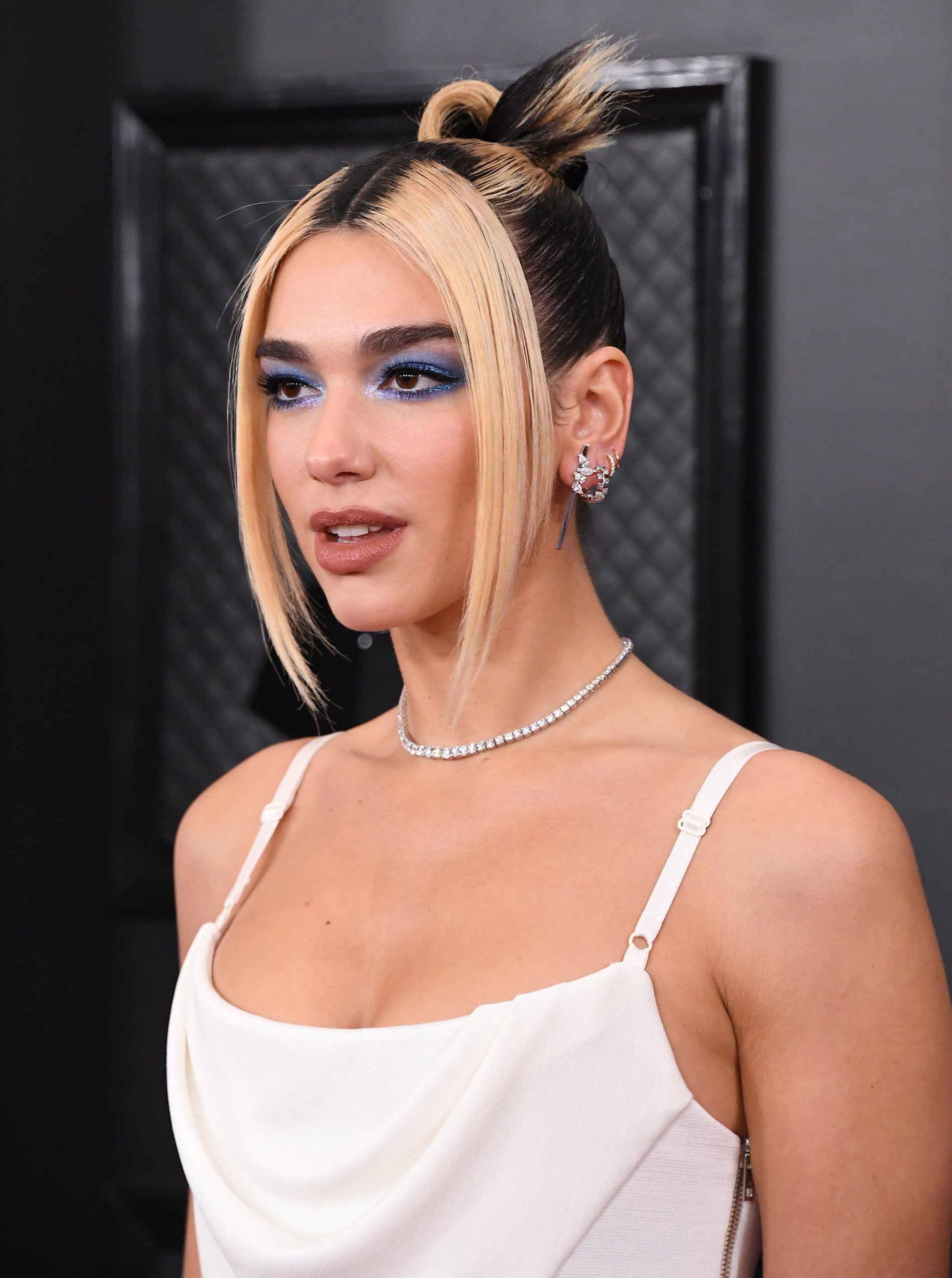
Before becoming a superstar, Dua worked as a hostess, a model, and a part-time waitress while recording demos. She faced countless rejections, endless doubts, and many warnings that her low alto voice was too unusual for the pop market. But she held firm to her uniqueness. She once said that she didn’t want to sound like anyone else — and ironically, it is precisely that difference, the smoky voice with a gritty texture, that would later make her unmistakable in any lineup of pop artists. Her persistence led to a breakthrough when she signed with Warner Music Group in 2014. What followed was the slow, steady build of a debut artist refusing to rush her craft. She began releasing singles one by one, allowing the public to discover her style gradually. Songs like “New Love,” “Be the One,” and “Hotter Than Hell” hinted at the future of her sound — dark pop with emotional honesty, attitude, and dance-forward energy. Each release grew her fanbase, giving her momentum that felt organic rather than manufactured.
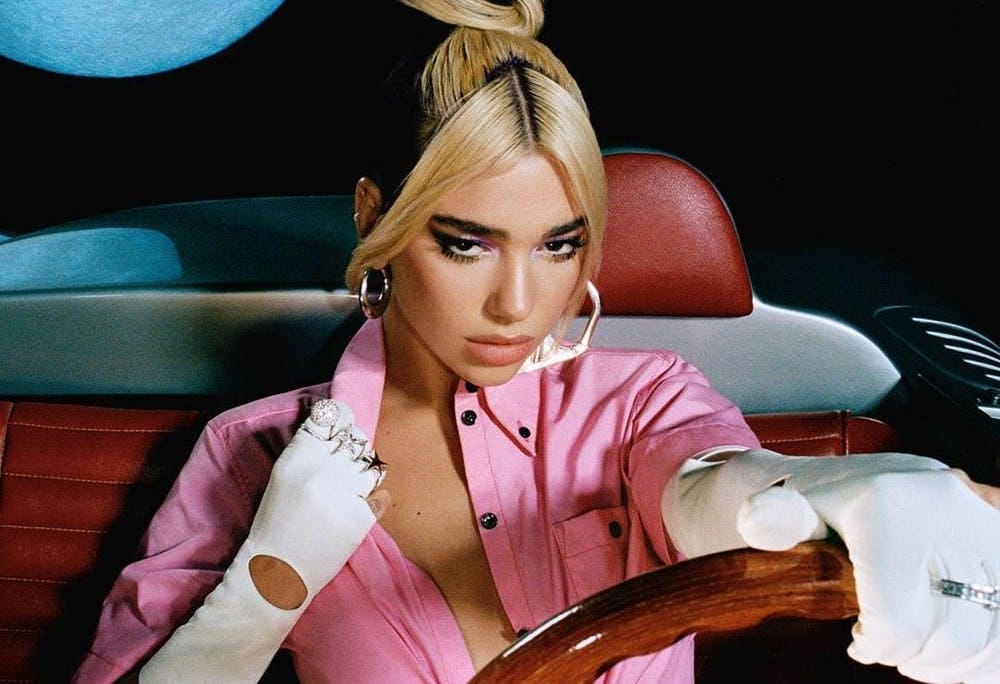
But the real turning point came in 2017 with her debut self-titled album, Dua Lipa, which included the now-legendary anthem “New Rules.” The song was more than a hit; it was a cultural moment, a rulebook for self-respect, independence, and empowerment delivered through catchy production and razor-sharp lyrics. It topped charts worldwide and became a symbol of post-breakup power. The music video, with its choreography and visual metaphors of women supporting women, cemented her image as a pop star with intention — modern, confident, and unafraid to speak to the emotional realities of young women everywhere. Suddenly, Dua Lipa was not just a rising singer — she was a voice shaping the new era of pop music. She went on to win two Grammy awards in 2019, including Best New Artist, proving that her ascent was not a trend but the beginning of a long-lasting career.
What sets Dua Lipa apart is her ability to reinvent her sound while maintaining her core identity. In 2020, at a time when the world was locked indoors and the music industry was uncertain, she released Future Nostalgia, an album that would become one of the most celebrated pop records of the decade. Blending disco, funk, dance-pop, and retro influences with a futuristic twist, the album redefined pandemic-era music. “Don’t Start Now,” “Levitating,” and “Physical” dominated global charts and became cultural soundtracks for millions seeking joy and escapism. Critics praised the album for its tight production, cohesion, and bold creativity. Dua had proven she was not just a breakout star but an artist capable of shaping the direction of pop. Her performances became legendary, from her floor-filling Brit Awards set to her flawless Grammy showcase that combined choreography, breath control, and charisma. She embodied the revival of dance-pop at a time when people desperately needed lightness and movement. Even more remarkable was her growth as a performer. Early in her career she faced criticism for her stage presence, with memes mocking her dancing. Instead of shattering her confidence, the negativity pushed her to train harder. By 2021, she had transformed into one of the strongest live performers in pop, leading a global tour that sold out arenas and stunned critics.
Her rise reflects not just artistic talent but strategic intelligence. Dua Lipa understands that in the modern era, an artist must be more than a singer — they must be a brand, a storyteller, and a cultural curator. She launched “Service95,” a global editorial platform, and the accompanying podcast “Dua Lipa: At Your Service,” which showcases her intellectual curiosity and passion for culture, politics, travel, and human stories. Through these platforms, she amplifies voices from around the world, interviews thought leaders, and shares insights far beyond the music industry. This expansion into media shows her multi-dimensional approach to influence, proving she’s not confined to the stage but thrives as a communicator and global observer.
Effectively, Dua has become a symbol of multicultural identity. Her Albanian roots are a central part of her persona, shaping her pride and sense of belonging. She advocates for Kosovo on the international stage, contributes to humanitarian causes, and uses her platform to highlight Balkan culture. In 2022, she was awarded Albanian citizenship, a gesture that represented not only her achievements but her role as a cultural bridge between the West and the Balkans. Her connection to her heritage is not performative — it is deeply emotional, visible in her interviews, philanthropic work, and personal relationships.
Beyond her career, Dua Lipa has become a fashion icon. Known for blending high-fashion silhouettes with playful streetwear, she collaborates with major designers and often sets global trends. Her style feels effortless yet intentional — bold colors, structured pieces, Y2K nostalgia, futuristic textures, and silhouettes that highlight her confidence. She has become a muse for brands like Versace, creating campaigns that redefine modern glamour. Fashion houses admire her not just for her image but for her ability to turn visuals into cultural statements.
As Dua continues to evolve, so does her music. In 2024 she signaled a new era with singles that explored psychedelic pop, alternative influences, and more introspective themes. She continues pushing boundaries, proving that she refuses to remain in one lane. Her strength lies in her versatility — she can deliver radio pop, dance anthems, emotional slow-burn tracks, and experimental sounds without compromising her identity. Her songwriting has also matured significantly, shifting toward narratives of self-reflection, growth, heartbreak, healing, and empowerment. She writes not just for a global audience but for a generation navigating identity, relationships, and self-worth in an increasingly complex world.
Dua Lipa’s story is ultimately a testament to self-belief. She is a young woman who moved countries for her dream, who built herself from zero in a competitive industry, who faced criticism and turned it into fuel, who embraced her cultural identity proudly, and who used her voice not only to entertain but to influence and inspire. She has become one of the defining artists of her generation — not because she followed trends, but because she set them. Her journey reminds us that success is not linear; it is carved through persistence, courage, authenticity, and the willingness to grow publicly.
Today, Dua Lipa stands as a global force — a singer whose songs dominate playlists, a performer who commands stages worldwide, a cultural thinker shaping conversations, and a symbol of modern womanhood defined not by perfection but by evolution. With every new era, she continues to expand what pop music can be and what a pop star can represent. She embodies the idea that creativity has no borders, identity has no limits, and ambition has no age. As she moves forward, fans and critics alike watch with anticipation, knowing that whatever chapter she writes next will be bold, transformative, and undeniably hers. Dua Lipa is not just a star — she is a movement, a mirror of her generation, and a testament to the power of reinvention.