Jack Nicholson stands among the rare figures in Hollywood whose very presence transcends the films he appears in. With a career spanning more than five decades, Nicholson has helped shape the landscape of American cinema, etching himself into the collective memory of audiences around the world. Whether playing a rebellious antihero, a charming scoundrel, a troubled romantic, or an unhinged villain, Nicholson consistently provided performances that are as magnetic as they are unpredictable. His raised eyebrows, sly grin, and unmistakable voice became cultural symbols, instantly recognizable even to those who may not have seen all of his films. To explore Nicholson’s life and career is to tour the evolution of Hollywood itself—its rebellious streak of the 1960s, its auteur-driven 1970s renaissance, and the blockbuster era that followed. 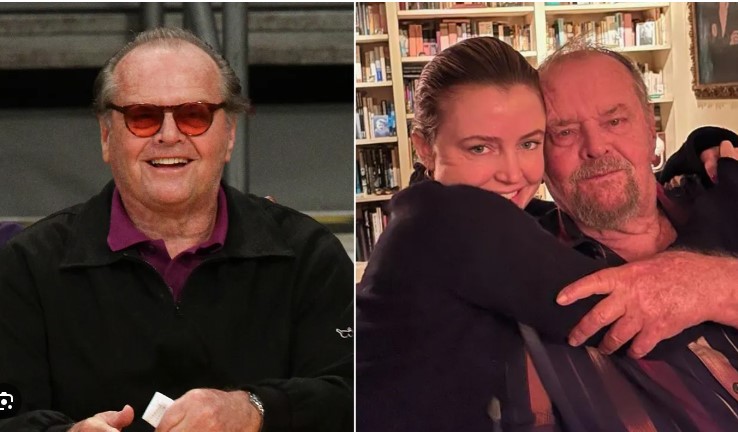
Born John Joseph Nicholson on April 22, 1937, in Neptune City, New Jersey, he grew up in an unconventional family structure that he wouldn’t fully understand until adulthood. Nicholson believed for years that his mother was his sister and his grandmother was his mother, a truth that only emerged decades later when a Time magazine researcher uncovered the family history. This early foundation, unusual as it was, perhaps contributed to the enigmatic quality Nicholson carried throughout his life. He learned early how to maneuver in an environment filled with secrets, and this psychological complexity became an unspoken layer of many of his roles.
Nicholson moved to Hollywood at the age of seventeen, drawn by the allure of acting but initially unsure of his place in the industry. He began as an office worker at MGM’s animation department but quickly discovered that his passion lay in performance, not production work. He studied acting under Jeff Corey, whose teachings emphasized emotional honesty, and aligned himself with the growing counterculture ethos of the late 1950s and early 1960s. Nicholson’s first screen appearances were in low-budget horror and biker films, most notably The Cry Baby Killer (1958), a project that did little for his reputation but marked the beginning of his relentless pursuit of acting opportunities.
For more than a decade, Nicholson struggled to break into mainstream Hollywood. He famously considered quitting acting altogether until fate intervened. When actor Rip Torn dropped out of Easy Rider (1969), director Dennis Hopper cast Nicholson in what became a star-making role. As George Hanson, the alcoholic lawyer who joins two bikers on their journey across America, Nicholson delivered a performance that captured the spirit of a nation on the brink of cultural upheaval. His brief but electrifying appearance earned him his first Academy Award nomination and established him as a rising talent capable of commanding the screen with subtle humor and poignancy.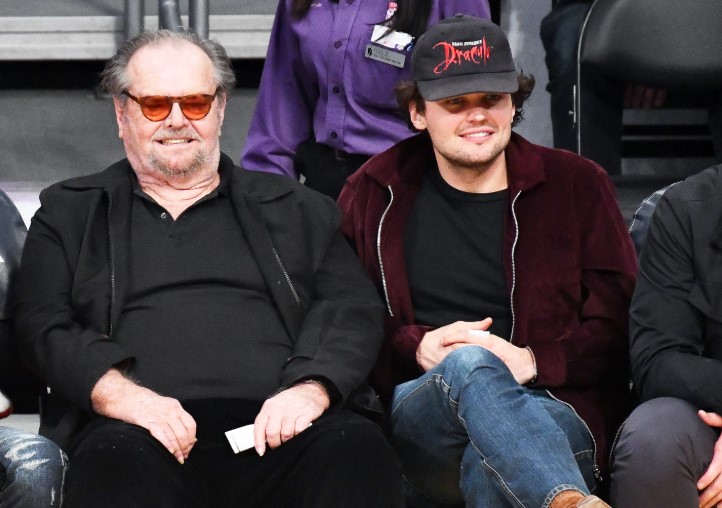
The success of Easy Rider opened the door to one of the most remarkable creative streaks in film history. Throughout the 1970s, Nicholson collaborated with influential directors such as Bob Rafelson, Roman Polanski, and Michelangelo Antonioni. In Five Easy Pieces (1970), Nicholson played Bobby Dupea, a drifter torn between his working-class life and his privileged upbringing. The film’s iconic diner scene, in which Nicholson confronts a stubborn waitress, became emblematic of his ability to blend frustration, sarcasm, and vulnerability into a single moment. His performance earned him another Oscar nomination and confirmed that Easy Rider was no fluke.
Nicholson’s range continued to expand with The Last Detail (1973), in which he portrayed Billy “Badass” Buddusky, a foul-mouthed sailor escorting a young recruit to prison. His explosive energy and emotional nuance earned him yet another Oscar nomination. But it was his role in Chinatown (1974), directed by Polanski, that solidified his status as a leading man of extraordinary depth. As private detective J.J. Gittes, Nicholson embodied a modern noir hero—cynical yet hopeful, confident yet painfully human. The film, with its haunting final line, “Forget it, Jake. It’s Chinatown,” is widely regarded as one of the greatest ever made, and Nicholson’s performance is central to its lasting power.
Just one year later, Nicholson delivered what many consider the pinnacle of his career: R.P. McMurphy in One Flew Over the Cuckoo’s Nest (1975). Directed by Miloš Forman and based on Ken Kesey’s novel, the film cast Nicholson as a charismatic rebel battling the oppressive Nurse Ratched inside a mental institution. His performance is a masterclass in controlled chaos—brimming with humor, defiance, tenderness, and rage. The role earned Nicholson his first Academy Award for Best Actor and cemented his reputation as the era’s defining actor.
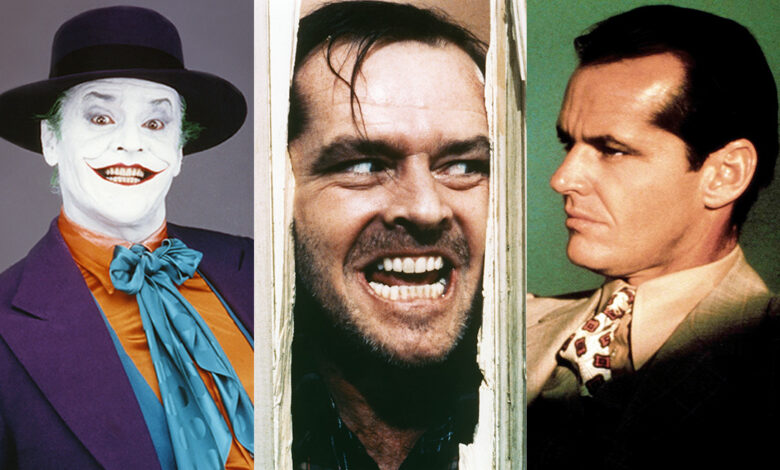
By the late 1970s and early 1980s, Nicholson transitioned from counterculture figure to full-blown Hollywood legend. His role as Jack Torrance in Stanley Kubrick’s The Shining (1980) remains one of the most iconic in horror history. Nicholson’s descent into madness, punctuated by the infamous “Here’s Johnny!” moment, showcased his ability to push intensity to the edge without losing control. Though initially met with mixed reviews, the film has since become a cult classic and a permanent fixture in discussions of cinematic horror.
Nicholson’s versatility continued to shine in the years that followed. In Terms of Endearment (1983), he played retired astronaut Garrett Breedlove, delivering a humorous and heartfelt performance that earned him his second Academy Award—this time for Best Supporting Actor. His chemistry with Shirley MacLaine was electric, proving that Nicholson could charm audiences as convincingly as he could unsettle them.
The late 1980s brought another cultural milestone with his portrayal of the Joker in Tim Burton’s Batman (1989). Long before superhero films dominated the box office, Nicholson created a villain who was both outrageous and deeply sinister. He infused the character with a theatrical flair that remains influential today. Many actors who later tackled comic-book villains, from Heath Ledger to Joaquin Phoenix, acknowledged Nicholson’s performance as a pivotal foundation.
The 1990s ushered in a new era for Nicholson—one marked by maturity, confidence, and a series of acclaimed roles that broadened his already formidable legacy. In A Few Good Men (1992), he delivered one of the most quoted lines in movie history: “You can’t handle the truth!” His portrayal of Colonel Jessup was commanding and unforgettable, earning him another Oscar nomination. He followed this with As Good as It Gets (1997), where he played Melvin Udall, a misanthropic writer with obsessive-compulsive disorder. Nicholson balanced cruelty and compassion with astonishing precision, ultimately winning his third Academy Award. His acceptance speech, filled with humor and humility, became yet another memorable moment in his storied career.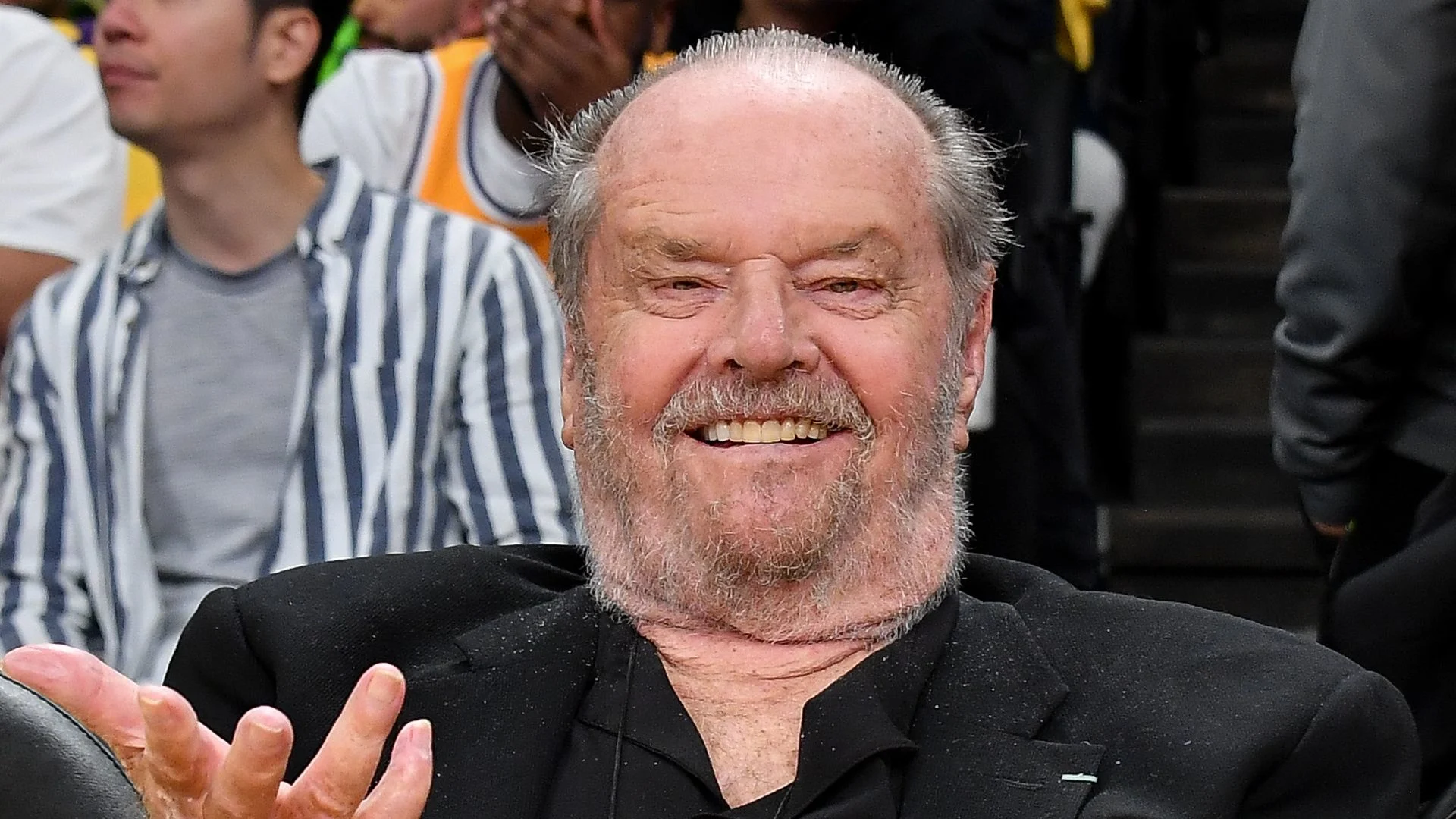
Though Nicholson’s output slowed in the 2000s, he continued to choose roles that highlighted his charisma and skill. About Schmidt (2002) offered a more subdued performance, revealing a side of Nicholson rarely seen—quiet, introspective, and deeply human. In Something’s Gotta Give (2003), he charmed audiences once again, this time opposite Diane Keaton, in a romantic comedy that played cleverly on his public persona as a lifelong bachelor. The Departed (2006), directed by Martin Scorsese, saw Nicholson in villainous form once more, delivering a wild, unpredictable performance as crime boss Frank Costello.
Beyond his on-screen achievements, Nicholson became a cultural figure of immense fascination. His courtside appearances at Los Angeles Lakers games, his legendary charisma at awards shows, and his reputation as one of Hollywood’s most committed method actors added depth to his mystique. He was known for immersing himself in roles, often rewriting dialogue or working closely with directors to craft memorable scenes. At the same time, he maintained an aura of privacy and independence, rarely revealing more than he wanted the world to see.
By the 2010s, Nicholson gradually stepped away from public life. Though often surrounded by rumors of retirement, he never formally declared the end of his acting career. Instead, he settled into a quieter existence, still admired, still iconic, still present in the filmographies of countless directors and actors as a benchmark of excellence. Younger generations continue to discover him through streaming platforms, where films like The Shining and One Flew Over the Cuckoo’s Nest have found new audiences.
Jack Nicholson’s legacy is unparalleled. With three Oscars and twelve nominations, he stands among the most decorated actors in Academy history. But awards only tell part of the story. What truly sets Nicholson apart is the authenticity he brings to every role. He doesn’t simply play characters—he inhabits them. His performances feel alive, unpredictable, and deeply human. He has the rare ability to make even the smallest gesture or line delivery resonate long after the credits roll.
Nicholson is an actor who embodied the evolution of American cinema—from the rebellious spirit of the 1960s counterculture to the New Hollywood revolution of the 1970s, from prestige dramas to mainstream blockbusters. He shaped the craft with a combination of raw talent, fearless choices, and an unmistakable personal style. His influence can be seen in generations of actors who cite him as an inspiration for their own work.
Ultimately, Jack Nicholson is more than a movie star—he is a cinematic force, a living embodiment of Hollywood’s golden and transformative eras. His characters remain timeless, his films continue to captivate, and his legacy endures as a testament to what an actor can achieve when talent, passion, and individuality converge. Even as he enjoys a well-earned retreat from the spotlight, his presence remains unmistakable. In every mischievous grin, every moment of controlled chaos, every unforgettable line, Jack Nicholson lives on in the fabric of American culture.