The Extraordinary Life of Sharon Stone — From Small-Town Girl to Unbreakable Hollywood Legend

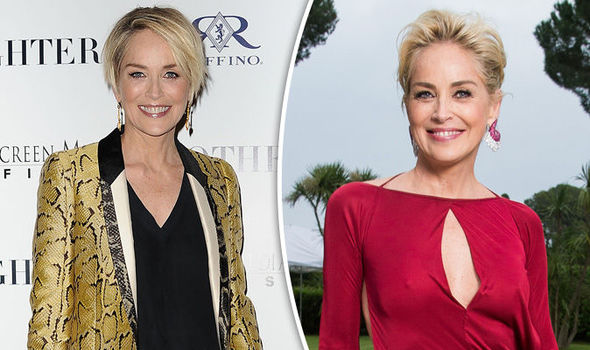
Sharon Stone stands as one of Hollywood’s most fascinating figures, a woman whose name evokes both cinematic brilliance and a kind of fearless personal reinvention that few stars have ever matched. Born in Meadville, Pennsylvania, in 1958, she grew up far from the glamour and chaos of Los Angeles. Her early life, shaped by a hardworking family and the values of a small American town, created the foundation for a personality that would later astonish the world: disciplined, sharp-witted, fiercely intelligent, unapologetically bold, and unafraid of the risk and sacrifice that come with pursuing greatness. Even long before she became a global icon, people around her often described her as different — unusually mature, creative, and aware. She was an exceptional student, gifted in reading and writing, and possessed the kind of perceptive intuition that would later make her such a compelling actress. At fifteen, she entered college, an almost unheard-of accomplishment, but soon discovered that her ambitions stretched beyond academia. She wanted to create, to transform, to perform — to build a life larger than anything her hometown could offer.

Her road to stardom did not begin with an overnight discovery, but with relentless determination and a willingness to do the unglamorous work that many aspiring stars never manage to push through. She started as a model, securing contracts in Europe and New York, where she was known not just for her striking beauty but also for her intensity and discipline. Unlike many models who relied purely on appearance, Stone approached the profession like a strategist. She studied poses, mastered expressions, and learned to convey meaning through the smallest movements. Casting directors began to notice that she possessed something beyond aesthetics — she had presence. It was only a matter of time before Hollywood came calling.
Her earliest film roles were small, often in genre movies where she had little control or creative space. But even with limited screen time, she radiated charisma. It wasn’t until 1990, however, that she made her first seismic impact on pop culture with a brief yet electrifying appearance in the science-fiction blockbuster “Total Recall,” starring opposite Arnold Schwarzenegger. As the seductive, mysterious Lori, Stone captivated audiences and directors alike. She brought a level of intelligence and emotional layering to the role that elevated what could have been a simple femme fatale into something far more compelling. That performance opened doors — and what stepped through next would redefine not only her career but an entire era of cinema.

In 1992 came “Basic Instinct,” the neo-noir thriller that would transform Sharon Stone from a rising actress into a global phenomenon. Catherine Tramell — brilliant, dangerous, sexually uninhibited, manipulative, and hypnotic — became one of the most unforgettable characters in film history. Stone’s performance wasn’t just provocative; it was fearless, emotionally complex, and psychologically sharp. She didn’t simply play a femme fatale — she reinvented the archetype. Every expression, every pause, every line of dialogue carried layered meaning and subtext. She controlled the camera, the energy of every scene, and even her co-stars. Critics and audiences were stunned. Directors began to speak of her as a performer with the rare ability to dominate the screen on both an emotional and intellectual level. She became instantly iconic, and the movie, controversial and groundbreaking, heated debates around gender, sexuality, power, and performance for decades.
Yet despite the world seeing her as an overnight sensation, Stone’s rise was not accidental. She meticulously shaped Catherine Tramell, researching psychology, studying criminal behavior, and examining how manipulation, intellect, and seduction intertwine. Her commitment to the craft was extraordinary, and the result was a portrayal that remains one of the most referenced performances of the 1990s. But with that fame also came the price of controversy. She became the center of public debates about morality, censorship, and female representation. Many underestimated her intelligence, assuming she was simply playing herself. They didn’t realize that Sharon Stone’s mind was one of her greatest weapons. Her IQ had been tested at genius level, and she often spoke about how people misjudged her, assuming that beauty and intellect couldn’t coexist.
Following “Basic Instinct,” Stone delivered another powerhouse performance in Martin Scorsese’s 1995 masterpiece “Casino,” starring alongside Robert De Niro and Joe Pesci. As Ginger McKenna, she displayed devastating emotional range — charm, vulnerability, rage, desperation, resilience, and tragic self-destruction. The role earned her an Academy Award nomination for Best Actress, and many critics still regard Ginger as one of the greatest performances of her generation. It proved, once and for all, that Stone was far more than a sex symbol — she was a formidable dramatic actress capable of playing characters of immense depth and fragility. Scorsese himself praised her commitment, intensity, and willingness to explore the dark corners of human psychology.
However, Stone’s life off-screen was as dramatic as her roles. Fame brought opportunities, but it also brought challenges, including tabloid scrutiny and the pressure to constantly prove herself. Hollywood, notorious for being unforgiving to women as they age, tried to pigeonhole her into stereotypes. Instead of conforming, Stone fought back — with intelligence, resilience, and the ability to reinvent herself. She took on diverse roles, appearing in dramas, thrillers, comedies, and independent films. Each time, she brought the same focus and precision that had defined her earlier work.
But in 2001, tragedy struck when she suffered a massive brain hemorrhage, an event that nearly ended her life. Doctors gave her little chance of survival, and even less chance of full recovery. The world watched as a superstar known for control and power suddenly faced fragile, unimaginable vulnerability. Stone has since described the experience as a kind of rebirth. She had to relearn basic functions — speech, memory, balance, emotional regulation. The process was long, painful, and deeply humbling. Hollywood, shockingly, turned its back on her during this period. She later revealed that she lost custody of her child, lost work opportunities, and faced an industry unwilling to accommodate her healing. But her resilience, perhaps forged in childhood, pushed her forward. Step by step, year by year, she rebuilt not just her health but her career.
Emerging from that period, Stone transformed her public identity yet again. She became a powerful advocate for health, women’s rights, and humanitarian causes. She used her platform to raise millions for AIDS research, cancer foundations, and global relief efforts. Her speeches, often fiery, honest, and emotionally raw, revealed a woman who had survived immense pain and used that pain to fuel compassion. Instead of letting Hollywood define her worth, she chose to define it herself.
Her later film roles reflect that evolution — characters with strength, wisdom, and emotional depth, often far removed from the glamorous femme fatales of her early years. She embraced more independent cinema, took risks with unconventional scripts, and collaborated with international directors. Even when she wasn’t the central figure in a film, she brought extraordinary presence and authenticity. Her willingness to age naturally in an industry obsessed with youth also made her a symbol of empowerment for countless women. Stone rejected artificial expectations, choosing transparency and honesty over image. She spoke openly about the injustices she faced, about being underestimated, about surviving trauma, and about rebuilding life from zero.
She also published a memoir, “The Beauty of Living Twice,” a deeply personal reflection on trauma, recovery, fame, love, loss, and the resilience of the human spirit. Critics praised its honesty and emotional force, noting that her writing reveals the same intelligence and precision that marked her cinematic performances. The book became not just an autobiography but an exploration of how a woman can reclaim her identity after the world tries to take it away.
Today, Sharon Stone occupies a unique place in popular culture. She is more than an actress — she is a symbol of evolution, reinvention, boldness, survival, and unapologetic authenticity. Younger generations continue to rediscover her classic films, while older audiences admire her outspoken voice and activism. What makes her story so compelling is not just the glamour or the scandal or the fame — it is the fact that she has lived a life of extraordinary contrasts. She has been both adored and criticized, celebrated and dismissed, powerful and vulnerable. She has experienced the highest peaks of acclaim and the lowest valleys of personal struggle. Through it all, she remained unmistakably herself.
Sharon Stone’s legacy is not merely tied to a single film or era. She altered the representation of women in thrillers, shaped the portrayal of powerful female characters, and pushed Hollywood toward more complex narratives. She proved that women could be brilliant, sexual, intellectual, mysterious, dangerous, emotional, and deeply human — all at the same time. She demonstrated that aging does not diminish relevance, that trauma does not erase strength, and that intelligence does not have to be hidden to survive. Far from fading into the background, she stands more confident, more articulate, and more influential than ever.
Whether delivering unforgettable performances, confronting industry injustice, advocating for global causes, or sharing her own story with authenticity and courage, Sharon Stone continues to embody resilience. Her journey — from small-town girl to global icon, from model to Oscar-nominated actress, from survivor to outspoken advocate — is one of the most remarkable narratives in modern entertainment. And even now, decades into her career, she remains unpredictable, magnetic, and emotionally powerful. Sharon Stone’s legacy is not only defined by the roles she has played but by the barriers she has broken and the strength she exhibits in every chapter of her life.