Sylvester Stallone stands as one of the most enduring figures in modern cinema, a man whose life and career seem almost indistinguishable from the rugged, relentless characters he created. Born on July 6, 1946, in New York City, Stallone entered the world under difficult circumstances. Complications during his birth caused nerve damage that partially paralyzed the left side of his face, leaving him with the slurred speech and distinctive snarl that would later become his signature. Yet what could have been a lifelong disadvantage became part of his identity, a reminder that his story has always been about perseverance, self-belief, and the power of relentless determination. His early life was anything but glamorous. Growing up in a turbulent household and moving frequently between New York and Maryland, Stallone had difficulty finding stability. 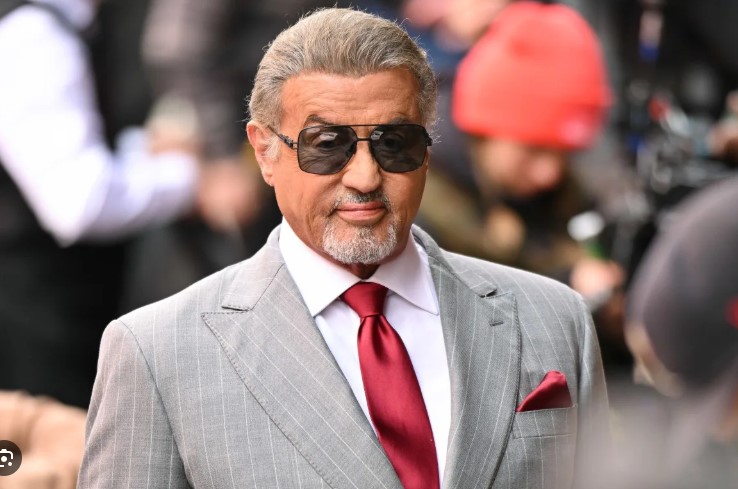 He struggled in school and sought refuge in sports and acting, though neither path seemed promising at first. His interest in performance eventually led him to the American College in Switzerland and later the University of Miami, where he studied drama. Even then, he was far from the archetype of a leading man. He lacked the polished diction and conventional good looks that Hollywood demanded, and he found himself constantly rejected. Still, Stallone refused to accept that the door to his dreams was closed. His early adulthood was marked by financial hardship. He took small roles wherever he could find them, even appearing in low-budget and obscure productions purely to survive. He worked as an usher, cleaned zoo cages, and slept in a bus station for days at a time when he could no longer afford rent. These moments are often described as the lowest point of his life, yet it was precisely during this period that Stallone’s most iconic idea began to take shape. In 1975, Stallone watched the underdog boxer Chuck Wepner go toe-to-toe with Muhammad Ali, a moment that ignited his imagination. Inspired by the grit and heart he witnessed, Stallone wrote the first draft of “Rocky” in just a few days. The script was rough, emotional, and deeply personal, reflecting not only the fight of a fictional boxer but Stallone’s own struggle for recognition. He famously refused to sell the script unless he could star in the film, despite being offered significant sums of money to hand it over. Most people thought he was crazy.
 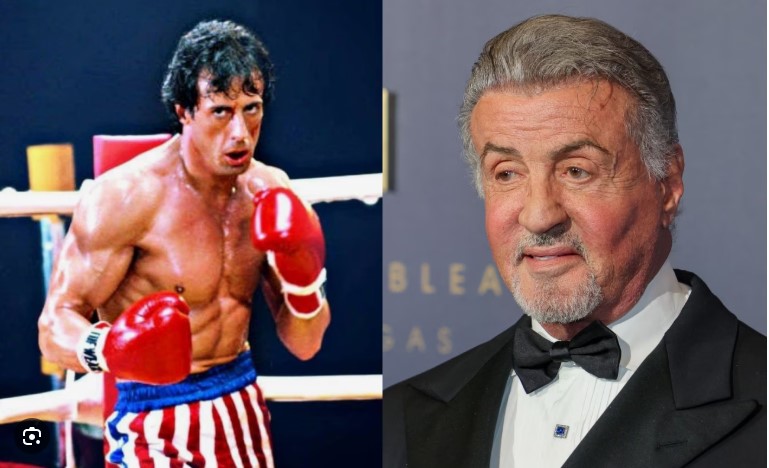 He was broke, desperate, and living on almost nothing. But he believed that this story was meant for him, that Rocky Balboa was not just a character but a symbol of everything he wanted to represent. Against all odds, the producers eventually agreed to cast him, albeit with a minimal budget and countless compromises. When “Rocky” was released in 1976, it became a cultural phenomenon, a film so resonant that it transcended sports and entered the realm of American mythology. The story of a small-time Philadelphia fighter given a once-in-a-lifetime chance captivated audiences around the world. More importantly, they felt the authenticity of Stallone’s performance. It wasn’t merely acting; it was a man pouring his entire soul onto the screen. “Rocky” won three Academy Awards, including Best Picture, and Stallone suddenly found himself transformed from a struggling actor into a household name. The success of “Rocky” could easily have defined Stallone’s entire career, and for many actors it might have. But he continued to evolve, taking control of his career by writing, directing, and producing many of the films he starred in. Over the following decades, he built a cinematic universe of tough, resilient, iconic characters who reflected different aspects of the American spirit. If Rocky Balboa represented determination and heart, then John Rambo represented anger, trauma, and the scars of war. Introduced in the 1982 film “First Blood,” Rambo was a very different kind of hero: a Vietnam veteran haunted by his past and pushed to violence by a society that misunderstood him. Stallone portrayed him not as a one-dimensional action figure but as a tragic symbol of postwar alienation. The character struck a chord, and the Rambo series became one of the defining action franchises of the 1980s. Stallone’s physique, intensity, and screen presence helped shape the era of the Hollywood action hero, carving out a persona that would influence countless films and actors for decades. Throughout the 1980s and 1990s, Stallone dominated the box office with a mix of sequels, original action movies, and dramatic roles. Yet his career also experienced ups and downs. Not every film succeeded, and as Hollywood changed, Stallone sometimes found himself fighting to remain relevant. But reinvention has always been one of his greatest strengths. He continued writing, producing, and taking creative risks. He revisited Rocky and Rambo at key moments, each time offering a more mature, reflective version of the characters. When “Rocky Balboa” arrived in 2006, many expected it to be nothing more than a nostalgic return. Instead, it became one of the most critically praised films of his career. Audiences saw not just a fictional boxer but also a real man confronting time, doubt, and loss. Stallone’s performance was raw, introspective, and deeply human. It reminded the world that underneath the muscles and action scenes, he was a storyteller with a genuine emotional voice.
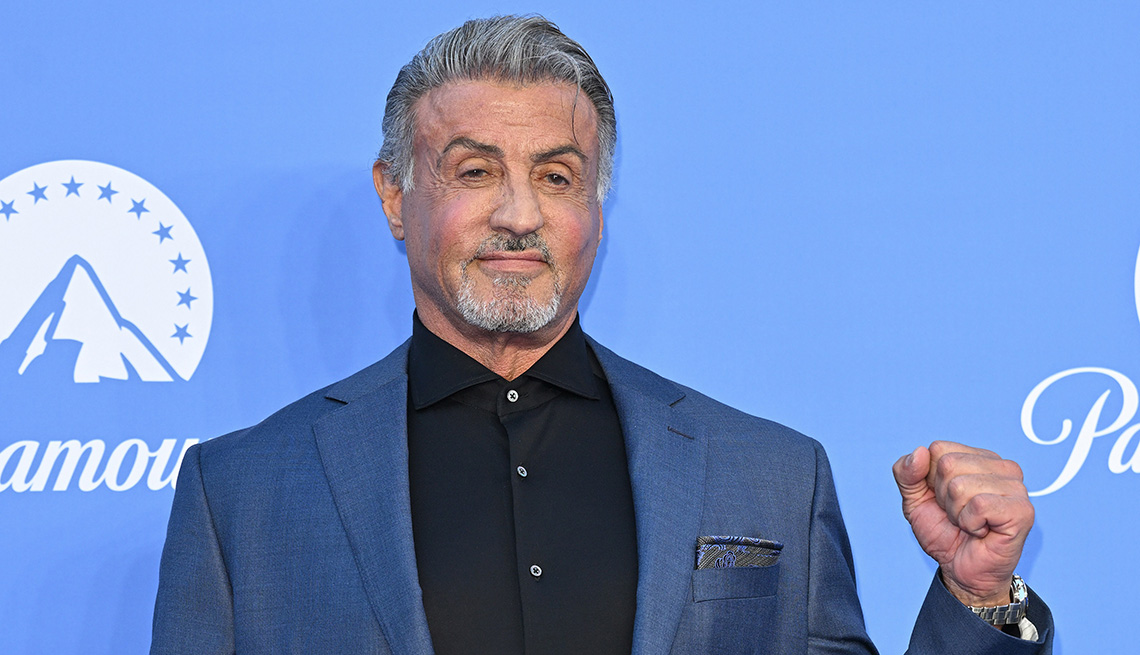
The reinvention continued with “Creed” in 2015, where Stallone stepped into the role of mentor and father figure, passing the boxing legacy onto Adonis Creed, the son of Apollo. His portrayal of an aging Rocky battling illness and loneliness earned him an Academy Award nomination, proving that even after forty years in the industry, he still had the ability to surprise audiences with depth and vulnerability. Beyond Rocky and Rambo, Stallone built an impressive résumé of diverse characters and projects. Films like “Demolition Man,” “Cliffhanger,” “Cop Land,” and “The Expendables” showcased his ability to adapt to different tones, from intense drama to over-the-top blockbuster spectacle. “The Expendables” in particular became a celebration of the action genre, uniting some of the biggest stars of the 80s and 90s and solidifying Stallone’s role as one of its defining architects. Despite decades of fame, Stallone’s personal life remained marked by challenges and tragedy. He dealt with public scrutiny, career slumps, and the devastating loss of his son Sage. Yet through it all, he continued working, always returning to the themes that shaped his own life: resilience, redemption, and the will to keep moving forward. His career, now spanning more than half a century, stands as a testament to the idea that success is not linear. Stallone has reinvented himself repeatedly, transforming from underdog to superstar, from action icon to respected elder statesman of cinema. He has embraced roles in television, ventured into business, and become an inspiration far beyond the film world. His journey resonates not only because of the characters he played, but because audiences see in him the same spirit that made Rocky Balboa beloved—a refusal to quit, even when the world says no. Today, Sylvester Stallone is regarded as one of the last living legends of his generation, a figure whose influence stretches across cultures and continents. His impact can be seen in the countless actors, writers, and directors inspired by his underdog story. New generations discover his films and still find them relevant, still feel the passion behind every punch, every speech, every moment of defiance. Stallone’s legacy is not just cinematic; it is emotional. He represents hope for anyone who has been underestimated, for anyone who has dared to dream bigger than their circumstances. His life reminds us that greatness often emerges from struggle, and that the most iconic heroes are not those who start at the top, but those who fight their way there. Even now, well into his seventies, Stallone shows no signs of slowing down. He continues to create, to act, to expand his artistic vision. He embraces his past while still looking toward the future. And perhaps that is the most defining quality of all: the ability to keep moving forward, to evolve without losing the essence of who he is. In the end, Sylvester Stallone’s story is far more than Hollywood success. It is the story of persistence forged through hardship, of a man who turned perceived weaknesses into strengths, and of a creator who built cinematic legends that will endure for generations. Stallone does not merely belong to film history; he belongs to all who believe in second chances and impossible victories. His life and characters continue to inspire because they spring from genuine experience—pain, hope, ambition, vulnerability, and triumph. And as long as audiences seek stories about courage and the human spirit, the legacy of Sylvester Stallone will continue to shine, proving that true icons are not born; they are forged through perseverance, passion, and the unbreakable belief that no matter how many times life knocks you down, you can always get back up and fight again.