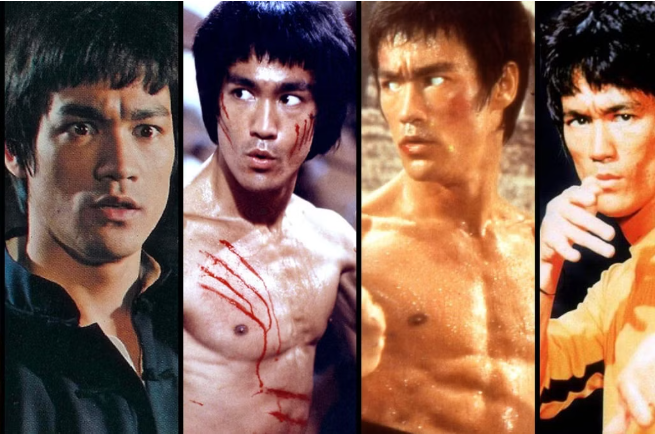
Bruce Lee stands as one of the most iconic and influential figures in modern cultural history, a man whose name evokes images of lightning-fast kicks, piercing intensity, and a philosophy that transcended martial arts to reshape the way the world thought about physical expression, personal potential, and cultural identity. To speak of Bruce Lee is to venture into the story of a revolutionary artist, a philosopher-warrior, and an international icon whose life, though tragically short, carved an indelible mark on cinema, martial arts, and global consciousness. Born on November 27, 1940, in San Francisco during the Year of the Dragon, Bruce Lee’s journey from child actor to martial arts innovator and worldwide superstar is a remarkable testament to relentless ambition, unwavering discipline, and a visionary mind constantly pushing beyond limits. Growing up in Hong Kong, Bruce Lee was exposed early to the world of performance through his father, Lee Hoi-chuen, a well-known Cantonese opera star. This environment sparked Bruce’s love for acting, but it also introduced him to the realities of the streets, where gang conflicts and neighborhood fights were common. These rough circumstances ignited Bruce’s interest in martial arts. He began studying Wing Chun under the legendary Ip Man, discovering not only his natural aptitude but also the foundational principles that would later evolve into his personal martial philosophy.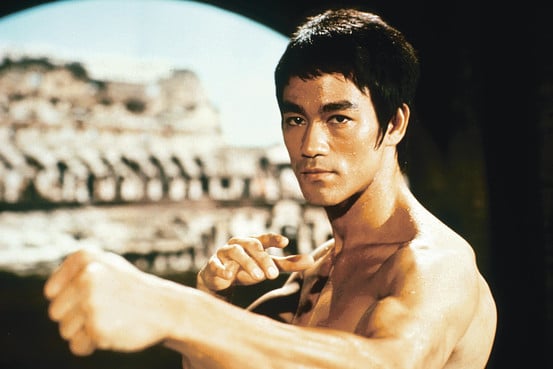
Bruce Lee’s early acting career in Hong Kong included several films as a child star. Yet it was not until he returned to the United States as a teenager that his metamorphosis truly began. Moving to Seattle in 1959 to continue his education, Bruce worked multiple jobs while teaching martial arts to support himself. His passion for self-improvement drove him to study philosophy at the University of Washington, a field that deeply shaped his worldview. He voraciously read works on Eastern and Western philosophies, psychology, physical culture, and even fencing, absorbing ideas like a sponge and weaving them into his developing martial theories. This synthesis is perhaps best exemplified by his eventual creation of Jeet Kune Do, a hybrid fighting system emphasizing efficiency, directness, and fluidity.
Jeet Kune Do was far more than a martial art; it was a declaration of independence from rigid forms, a belief that no system should confine the individual. Bruce Lee’s famous quote, “Absorb what is useful, discard what is useless, add what is specifically your own,” became a universal mantra not only for combat but for creativity, innovation, and self-realization. Rejecting traditionalism in favor of adaptability, Bruce sought truth in motion. His training routines were grueling and scientific, involving everything from high-intensity drills to weight training, flexibility exercises, nutrition studies, and experimentation with unconventional equipment. Long before cross-training became mainstream, Bruce Lee was blending disciplines—boxing, wrestling, fencing, judo, and various kung fu styles—creating a dynamic and modern approach that revolutionized martial arts and influenced generations of fighters, including today’s mixed martial arts (MMA) world.
Bruce’s charisma and skill soon attracted attention in the entertainment industry. His breakthrough came in 1966 with the role of Kato in the American TV series The Green Hornet. Though the show ran for only one season, it introduced Bruce Lee’s electrifying presence to American audiences. Still, Hollywood at the time was not prepared to fully embrace an Asian leading man. Frustrated by limited opportunities, typecasting, and racial barriers, Bruce Lee returned to Hong Kong, where everything changed. His star rose almost instantly upon landing. Hong Kong audiences were stunned to discover that the man they had admired as Kato was, in fact, a martial arts master with an extraordinary screen presence. Signed by Golden Harvest, Bruce Lee starred in The Big Boss (1971), a film that shattered box office records and heralded the arrival of a new kind of action hero: raw, fearless, and authentically powerful. His follow-up films, Fist of Fury (1972) and Way of the Dragon (1972), solidified his legendary status. The latter included what is widely considered one of the greatest fight scenes in cinematic history—Bruce Lee versus Chuck Norris in the Colosseum in Rome—showcasing Bruce’s charisma, technical brilliance, and mastery of screen combat choreography.
Bruce Lee’s meteoric rise continued as he began production on Enter the Dragon, a film co-produced by Hollywood and Hong Kong studios. Tragically, Bruce did not live to witness its premiere. On July 20, 1973, Bruce Lee died suddenly at the age of 32. The world was shocked, devastated, and hungry for answers. While debates around the cause of his death have persisted for decades, what remains undeniable is the enormous void left by his passing. Yet Bruce Lee’s legacy did not end with his death; in many ways, it had only begun. Enter the Dragon was released shortly after and became a global phenomenon, cementing Bruce Lee’s status as a legend. The film introduced martial arts cinema to the Western mainstream and inspired countless individuals to pursue martial arts, fitness, and Eastern philosophy.
Beyond his cinematic accomplishments, Bruce Lee was a philosopher whose ideas continue to resonate. His published works, interviews, and private notes reveal a thinker who contemplated the nature of self-expression, the illusion of limitation, and the harmony between body and mind. Bruce spoke often about the importance of being like water—adaptable, shapeless, able to fit any container, and capable of unstoppable force when flowing freely. This metaphor has become one of his most enduring teachings, symbolizing not only martial skill but also personal liberation and resilience. Bruce Lee’s writings encourage readers to question assumptions, embrace continuous learning, and live authentically. At a time when Asian representation in global media was sparse and often stereotypical, Bruce Lee stood as a proud, articulate, and inspirational figure whose confidence and cultural pride challenged racism and empowered countless people worldwide. His influence can be seen in the careers of martial artists, actors, athletes, and thinkers who cite him as a life-changing inspiration.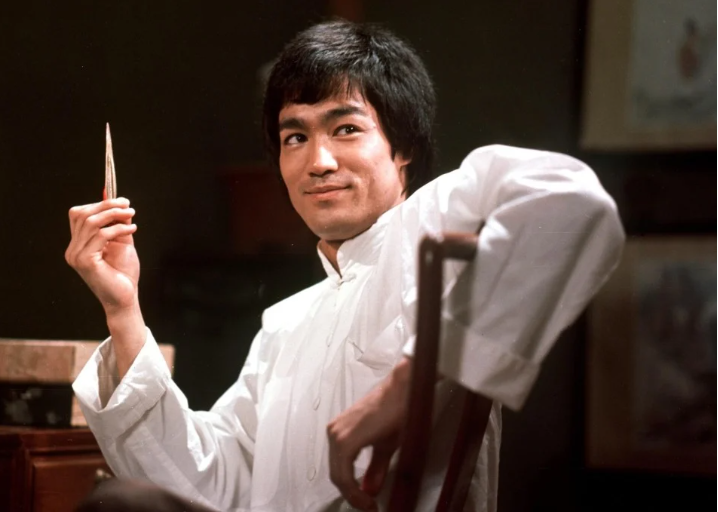
In martial arts, Bruce Lee’s legacy is omnipresent. The principles of Jeet Kune Do laid the philosophical groundwork for modern MMA, emphasizing practicality over tradition, fluidity over rigidity, and the blending of diverse combat disciplines. Fighters across the UFC, ONE Championship, and other organizations often express admiration for Bruce Lee’s pioneering mindset. His scientific approach to training—incorporating biomechanics, nutrition, psychology, and customized routines—predated and predicted today’s sports science movement. His concept of “honest self-expression” continues to inspire athletes who view martial arts as a vehicle for personal growth rather than merely competition.
In cinema, Bruce Lee revolutionized the portrayal of martial arts on screen. His choreography was not mere spectacle; it expressed emotion, narrative, and cultural pride. He insisted on authenticity, speed, and clarity, influencing generations of filmmakers and stars—from Jackie Chan and Jet Li to modern actors such as Donnie Yen and Tony Jaa. Hollywood’s action genre owes a profound debt to Bruce Lee, whose blazing speed, intense screen presence, and groundbreaking fight scenes set new standards for decades to come. Even today, references to his iconic yellow jumpsuit in Game of Death or the nunchaku sequences in Fist of Fury appear across popular culture, from video games to animated series, music videos, and fashion.
Culturally, Bruce Lee’s impact is even deeper. He became a global symbol of discipline, excellence, and the breaking of barriers. For many Asian communities, he represented pride, confidence, and the power to defy discrimination. For people of all backgrounds, Bruce Lee embodied the possibility of achieving greatness through persistence and authenticity. His philosophy of self-improvement resonates across cultures and generations. His books, such as Tao of Jeet Kune Do and Bruce Lee’s Fighting Method, remain widely read, while documentaries, biographies, and academic studies continue to explore his profound influence.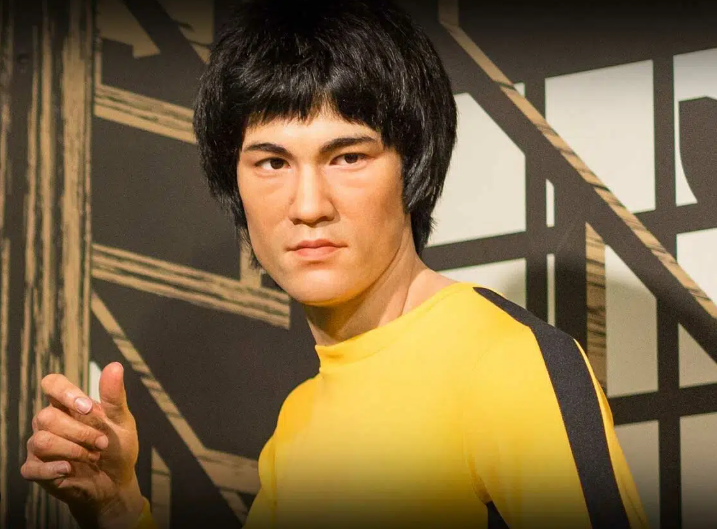
Bruce Lee’s family also played a role in preserving his legacy. His wife, Linda Lee Cadwell, his daughter Shannon Lee, and the Bruce Lee Foundation have worked tirelessly to honor his memory, promote his teachings, and ensure that his story remains alive in new generations. Exhibits, documentaries such as Be Water, and new publications continue to introduce Bruce’s philosophy to global audiences, demonstrating that his influence extends far beyond martial arts or cinema. The legend of Bruce Lee persists not because of myth-making, but because the truth of his achievements is extraordinary enough. He was a man who fused cultures, united East and West, and challenged conventional boundaries through his relentless pursuit of improvement. Bruce Lee transformed weakness into strength, obstacles into opportunities, and personal challenges into universal lessons.
What makes Bruce Lee a legend is not merely his skill or fame, but the totality of his being: his physical mastery, philosophical depth, visionary creativity, and global cultural impact. He lived with intensity, thought with clarity, trained with purpose, and acted with passion. His life story serves as a timeless reminder that greatness is not a matter of lucky birth or circumstance but the product of self-awareness, discipline, courage, and the refusal to be confined by limitations—whether imposed by others or by oneself. Today, decades after his passing, Bruce Lee remains a symbol of human potential. His films continue to thrill, his teachings continue to inspire, and his legacy continues to evolve. Whether one encounters him as a martial artist, an actor, a philosopher, or an icon of empowerment, Bruce Lee stands as a beacon of what is possible when one dares to challenge norms and pursue excellence relentlessly.
In the end, Bruce Lee’s legend is not simply about martial arts or movies. It is about the fire within a person who refuses to be anything less than the fullest expression of themselves. It is about shaping one’s own path with courage, fluidity, and authenticity. It is about becoming like water—adaptable, resilient, and unstoppable. Bruce Lee’s life reminds us that the true battle is not with an external opponent but with our own limitations and fears. His message is timeless: to grow, to evolve, to express oneself honestly, and to live with purpose. Through this message, Bruce Lee continues to speak to the world, inspiring millions to rise, strive, and unleash their own potential. A legend not because he sought to be one, but because he lived fully, passionately, and fearlessly. Bruce Lee, the Dragon, lives on.