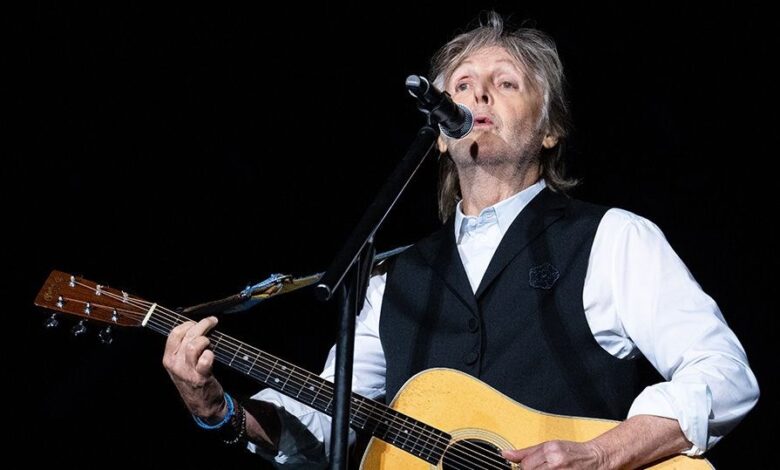
Paul McCartney stands as one of the most influential figures in modern music, a name that has transcended genre, generation, and geography. To speak of McCartney is to speak of an era in which music became more than entertainment—it became a cultural force, shaping identities and inspiring movements. As a founding member of The Beatles, a prolific solo artist, the creative mind behind Wings, and an unwavering advocate for artistic freedom, McCartney’s contribution to the evolution of contemporary music is immeasurable. His career embodies a rare balance between innovation and accessibility, between personal expression and universal connection. Across decades, he has crafted a body of work that remains continually relevant. While many artists make hits and fade, McCartney created not only songs but also symbols—melodies that evoke shared memories and moments.
Born in Liverpool in 1942, James Paul McCartney grew up in a working-class family where music was part of daily life. His father, Jim McCartney, played trumpet and piano, nurturing young Paul’s early interest. These early influences planted seeds of a lifelong relationship with melody. Unlike many musicians, McCartney did not begin with a burning ambition for fame; instead, he developed a deep love for sound, harmony, and experimentation. When he met John Lennon at the now-legendary Woolton Village Fete in 1957, it marked a turning point in music history. McCartney’s innate musical sensitivity and Lennon’s sharp lyrical instinct formed a complementary partnership that would power one of the world’s most iconic songwriting duos. Their creative chemistry fueled The Beatles’ rise from local performers to global legends.
The Beatles were more than a band—they were a cultural revolution. Between the early 1960s and early 1970s, McCartney’s songwriting expanded in both subject and sophistication. Early hits like “Love Me Do,” “I Want to Hold Your Hand,” and “Can’t Buy Me Love” captured youthful exuberance, while songs such as “Yesterday,” “Eleanor Rigby,” and “Hey Jude” exhibited emotional depth and melodic mastery. “Yesterday” in particular remains one of the most covered songs in history, a reflection of McCartney’s gift for crafting melodies that resonate across languages and cultures. His ability to blend classical elements with pop sensibilities demonstrated a unique musical intellect. McCartney was never content to remain within a single creative boundary, always pushing forward into new sonic territories.
As The Beatles evolved, so did McCartney’s role in shaping their sound. His contributions on bass redefined the instrument’s purpose in pop and rock contexts. Instead of simply serving as rhythmic support, McCartney often crafted basslines that carried melodic weight, adding dimension to the music. Songs such as “Something,” “Come Together,” and “Rain” showcase his innovative approach. Simultaneously, he played piano, guitar, and various other instruments with equal fluency. In the studio, McCartney grew increasingly involved in arrangements, recording techniques, and production concepts. Albums like Revolver, Sgt. Pepper’s Lonely Hearts Club Band, and Abbey Road reveal his curiosity and ambition. McCartney didn’t just write songs—he shaped sonic landscapes. His artistic restlessness became a defining element of The Beatles’ enduring creative legacy.
After The Beatles’ breakup in 1970, many wondered whether McCartney could sustain a career outside the shadow of the world’s most celebrated band. He answered this question with remarkable resilience. His debut solo album, McCartney, introduced a more intimate, homemade aesthetic, reflecting his desire to explore new territory. In 1971, he and his wife, Linda McCartney, formed Wings, a band that embodied a more relaxed, collaborative spirit. Rather than chasing The Beatles’ level of cultural dominance, McCartney focused on writing music that felt authentic and joyful. Hits like “Live and Let Die,” “Band on the Run,” “Jet,” and “My Love” demonstrated his continued ability to produce chart-topping songs. Wings achieved substantial success throughout the 1970s, proving that McCartney’s creative momentum was not tied to any single group or era.
Throughout the 1980s, 1990s, and beyond, McCartney continued to evolve, experimenting with electronic music, orchestral compositions, collaborations with contemporary artists, and even poetry and painting. His willingness to explore diverse artistic domains speaks to a deeper truth about his philosophy: creativity is a form of lifelong play. McCartney has always maintained a childlike curiosity, an openness to new sounds and ideas. Unlike many musicians who remain confined to the style that made them famous, he has demonstrated an ongoing desire to learn and reinvent. This adaptability not only prolongs relevance but also allows McCartney to connect with new audiences across generations.
McCartney’s solo work reflects a wide emotional range. Songs like “Maybe I’m Amazed” convey vulnerability and devotion, while tracks like “Silly Love Songs” challenge critics by embracing sentimental pop with confidence and humor. His ability to balance introspection with optimism is one of his signature traits as a songwriter. Even when dealing with themes of loss, memory, or reflection—as in “Here Today,” his tribute to John Lennon—McCartney’s music often carries a sense of hope. This optimism is not naïve; rather, it stems from a belief in music’s power to heal, transform, and uplift.
Another vital dimension of McCartney’s legacy is his activism and advocacy. For decades, he has been an outspoken supporter of animal rights, environmental causes, and humanitarian efforts. His long-standing commitment to vegetarianism, influenced by Linda, helped bring global attention to sustainable living and ethical food choices. Through campaigns such as “Meat Free Monday,” McCartney continues to leverage his fame for positive change. Additionally, his participation in global charity events, including Live Aid and various benefit concerts, demonstrates a broader understanding of music’s cultural responsibility. For McCartney, creativity and compassion are intertwined.
McCartney’s influence extends across countless musical genres and generations. Many contemporary artists—from rock and pop to indie and singer-songwriter communities—cite him as an inspiration. His melodic instinct, emotional clarity, and inventive approach to arrangement have shaped the work of musicians worldwide. Yet McCartney’s impact is not limited to technical aspects of songwriting. His presence in the public imagination has contributed to shaping what it means to be a modern artist. He embodies a blend of authenticity, humility, and craftsmanship that resonates with both aspiring musicians and devoted fans. McCartney’s work ethic, even after decades of acclaim, illustrates his deep respect for the craft and for the audiences who continue to embrace his music.
In live performances, McCartney remains a dynamic and engaging presence. His concerts, often spanning three hours or more, include songs from every era of his career, offering fans a journey through musical history. Despite the passage of time, McCartney’s ability to connect with audiences of all ages remains undiminished. His stage presence is warm, humorous, and genuine, reflecting a lifetime of shared moments with fans. Performing classics like “Let It Be,” “Blackbird,” or “Hey Jude,” he transforms large arenas into intimate communal spaces. The collective experience of singing along to these songs reinforces the idea that McCartney’s music is not just listened to—it is lived.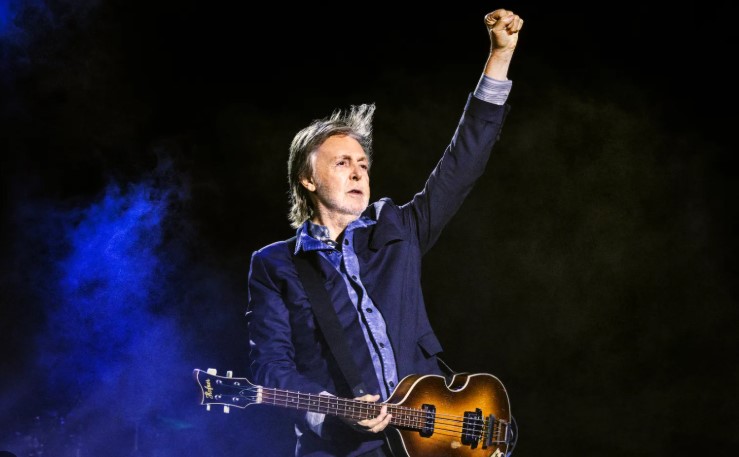
Beyond his musical achievements, McCartney’s personal resilience has defined much of his public life. The losses he has endured, including the deaths of John Lennon, George Harrison, and his beloved wife Linda, shaped his emotional landscape. Yet McCartney has consistently approached life with gratitude and forward momentum. His dedication to family, creativity, and positive living serves as a quiet but powerful message. For McCartney, life is not about perfection but about connection—through art, through relationships, through moments of shared humanity.
Today, Paul McCartney stands as a symbol of artistic longevity. Few artists have maintained both relevance and integrity across so many decades, and even fewer have done so with such grace. While his achievements are monumental—numerous awards, hundreds of millions of album sales, and a catalog of songs that have become cultural touchstones—his true legacy lies in something more enduring. McCartney has shaped the emotional soundtrack of countless lives. His songs accompany weddings, memorials, celebrations, and quiet reflections. They serve as markers of time, reminders that music has the power to capture emotion in ways words cannot.
To understand Paul McCartney is to understand the evolution of modern music. He is not simply a participant in musical history; he is one of its primary architects. From the explosive creativity of The Beatles to his ongoing solo career, McCartney has demonstrated a rare ability to balance innovation with accessibility. His work bridges the gap between past and present, between classical and contemporary, between personal expression and universal appeal. His melodies continue to resonate because they reflect something fundamental about human experience—the desire for connection, the pursuit of meaning, the celebration of love and life.
As the world continues to change, McCartney’s music endures. Not as nostalgia, but as a living, breathing force that continues to inspire. His career is a testament to what is possible when talent meets passion, when discipline meets imagination. Paul McCartney’s story is not merely about fame or success; it is about the transformative power of art. Through his songs, performances, and ongoing creative pursuits, McCartney reminds us that music can be both timeless and ever-new. It can heal, unite, and elevate. It can turn simple moments into memories that last a lifetime.
In the end, Paul McCartney’s legacy is one of possibility. He showed the world that creativity has no limits, that melodies can shape history, and that a single voice can echo across generations. His journey is a celebration of artistic courage and emotional honesty, a reminder that music—at its best—is not just something we hear, but something we feel, something that stays with us long after the final note fades. Paul McCartney remains, and will always remain, a beacon of musical brilliance, an artist whose work continues to illuminate the human spirit.